While clones and cuttings is an effective practice that’s been used, one new thing that’s developed as of late, is the CRISPR/Cas9 means to help with developing similar hemp and medical cannabis seeds. For those who do not know, CRISPR is a type of gene editing that basically alters the DNA, and controls what the organism is able to express. This basically allows for the seeds and organisms of this to have a type of uniformity that you don’t have to use cloning with.
Basically, they move a portion of this directly from the host itself, creating a new plant directly from this. CRISPR is basically a technology that utilizes genetics that are within the cannabis cuttings of the traditional plants, and this does vary.
As the plant starts to age, the cuttings stop being as uniform, but those taken early on will be far different from the cuttings taken before the plant dies.
The growers usually take about 20% of the current cannabis that they’ve got to make clones. Of this, the variants between this are quite dramatic too.
For those that grow hemp, where you have to limit the THC within this, there are THC variants, so that’s why CRISPR/Cas9 types of gene editing are going to be beneficial for this type of industry.
What it Is Exactly
For those of us who don’t know what this is, the CRISPR technique is short for clustered regularly interspaced short palindromic repeats and was found and developed in 2012. This was actually something that changed the world of genes and gene editing, and it had a major impact that they actually got the Nobel Prize in 2020 in the chemistry department.
This type of genetic editing involves taking the DNA sequences, cutting them away, in order to showcase different traits that are there including the colors, and in the case of cannabis, whether it’ll have more CBD or THC.
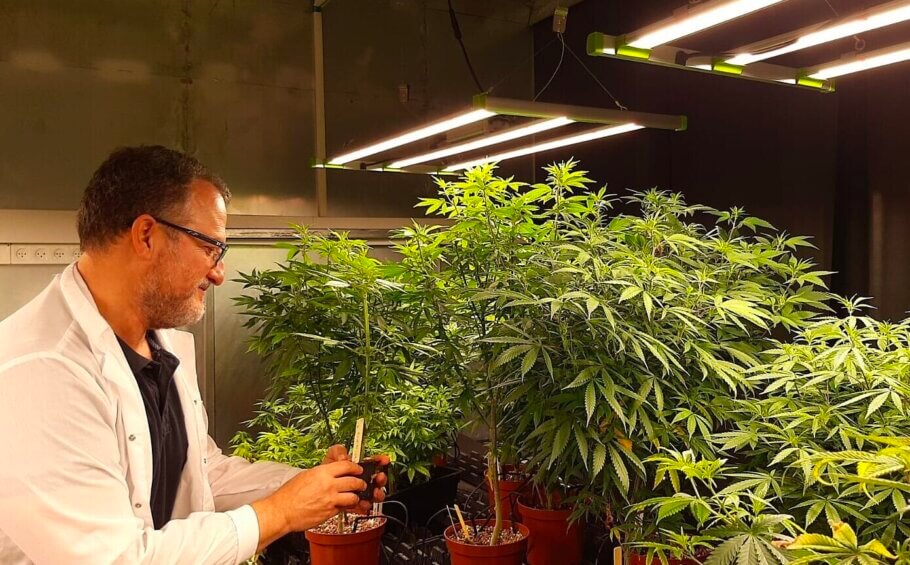
They are modified or eliminated fully from the plant. It’s basically taking cannabis, custom designing this, and doing so in a very precise manner.
This actually wasn’t found in a lab, but instead, CRISPR was discovered as a mechanism against bacterial infections, and it was capable of finding the correct sequences of DNA used in order to cut them, so that the agent that’s infectious isn’t there.
When this was developed, it was basically a form of molecular scissors that was used for all sorts of animals and plants.
This is a huge leap for many in agri-food industries, and also for editing of genes as well.
Transgenics has become a major part of this for decades, and it’s something that many search for the varieties of. The plants that get modified with this are not transgenic, since CRISPR doesn’t actually put foreign kinds of DNA into there.
The genetic material then gets edited without the genes added from different organisms and species either.
How this works does vary.
It involves selecting genes that you’d like to modify, creating an RNA sequence that’s similar to the DNA and complements it.
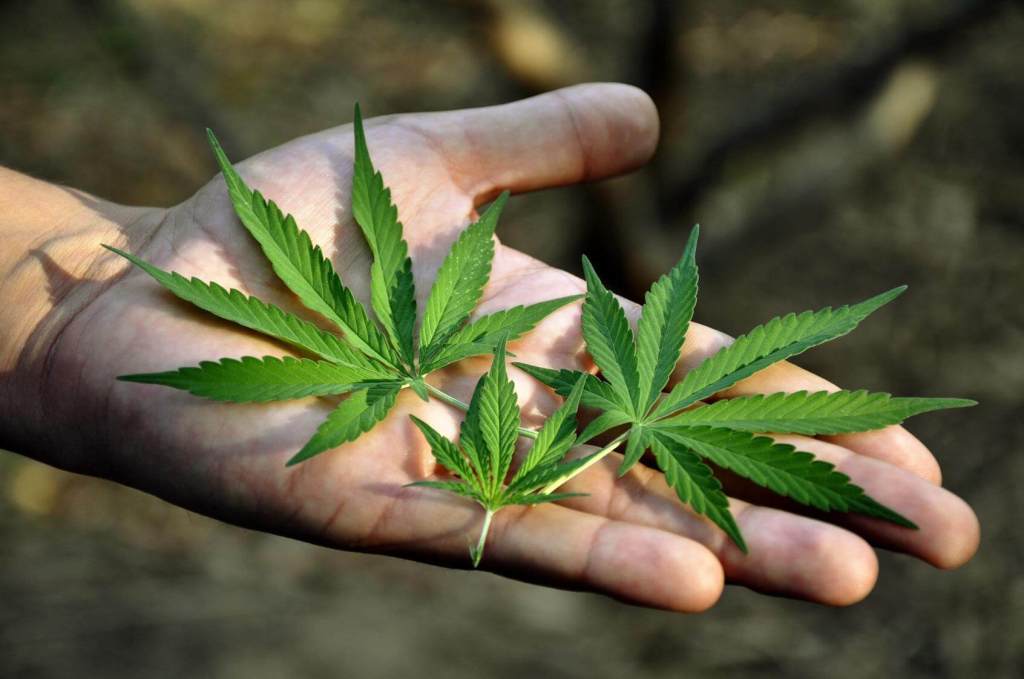
Then, they splice it, add in the new DNA, and from there, it gets targeted to the genes and cells. This is something that’s also detected by the genes targeted.
This is something that can help the industry immensely. Cannabis is changing a lot, and with more and more states allowing it to be a thing. Hopefully, as we see more and more usage, this will change the way that the minor cannabinoids and other compounds in cannabis start to show as well. In plants.
 No Health Obstacles