It seems that we are constantly running into new forms of CBD or THC that we need to learn about. Back in the 1970s, there was a big push to learn more about THC and therefore learn about the different types of THC that could be created or discovered.
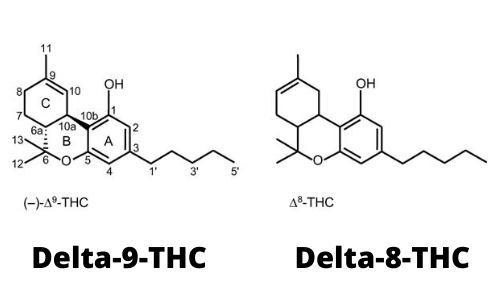
Now we have quite a number of THC variations: Delta-8, Delta-9, THC-P, THC-O, THC-V, and the list goes on. I know that all of these things can get confusing, but today I wanted to talk about Delta-8 and Delta-9 specifically, mostly because these are the ones that are most commonly used in the United States today. Delta-8 is an especially hot topic in the United States right now, since it is technically considered CBD but also can get you high.

You see, the reason that CBD has been legalized by the federal government is because it does not inherently contain any THC. Since it is technically derived from hemp, it has become completely legal across the nation. But what is Delta-8 then? Well, I am going to be talking about all of this today in this article, so make sure that you keep reading if you want to learn more. Anyone who has smoked their fair share of weed could tell you about a THC high that we associated with Delta-9.
Of course, the high you get can differ depending on the strain of marijuana that you use, but most are somewhat similar to each other. You get that nice warm feeling in your brain, your body starts to tingle a bit, you feel happy and giggly and relaxed: it’s all just a great time. But have you ever been a little disappointed after getting high? Sometimes it can be frustrating to come down from a high and realize you have no idea what happened for the last couple of hours.
You couldn’t really focus on anything or get anything done, you simply just vibed for a bit. While that can be a fun pastime, it is not necessarily a sustainable practice for people using medical marijuana every night to treat certain health conditions. Plus, Delta-9 THC is not legal in every state. However, this is where Delta-8 can come in.
As I said before, Delta-8 is technically considered CBD. It’s basically a loophole in the federal government’s law against THC products nationwide. But Delta-8 is still different from other types of THC, and noticeably so. Some people prefer using Delta-8, while others say that it pales in comparison to the classic Delta-9 THC that they know and love.
Either way, I think it is important to at least give Delta-8 a try and decide for yourself. Like I talked about before, Delta-9 THC can really impair your ability to think clearly, function, or even converse with people. You kind of just float for a bit. Delta-8, in comparison, is a type of high in which one still has a lot of control. People that regularly use Delta-8 definitely feel its effects, but they don’t feel completely impaired from doing things or thinking.

For some people, this is a huge benefit. Don’t get me wrong – Delta-8 definitely makes you feel intoxicated to where you shouldn’t drive or do things like that, but it is not going to be as intense as a Delta-9 high. Some research suggests that Delta-8 THC could actually be better for the brain in the long run. It is said that adults who use large doses of THC daily will see changes in their brain overtime. Delta-9 THC can cause a reduction in brain tissues in the prefrontal cortex, but this is only for very chronic users of the drug.
 No Health Obstacles